
Odd Nerdrum: “Crossing the Border”
On a small farm at the cusp of the Norwegian seaside, in a rustic wood-paneled studio strong with the smell of linseed oil and time-tested pigments, a pack of painters cluster around the Master, passing a bottle of wine and poring through stacks of aged books.
The volumes of images, pages smudged with paint stains and spines cracked from years of devoted study, are laid out for comparison, ranking, and impassioned debate: which paintings are the greatest masterpieces? The blue light of the midnight sun filters through northerly windows and a ram in the field outside contributes his voice. The scene is not unlike one you’d imagine taking place in the atelier of Rembrandt, or indeed in the studio of the ancient Greek master Apelles, who for centuries after his death would be held as the gold standard for great painters.

Caleb Knodell: “Self Portrait as Possessed”
These pupils, some novice and some established, have come from all over the world to learn from the Master: the greatest living painter, Odd Nerdrum. For these select and dedicated talents, lineage, timelessness, and craft are the highest ideals to be obtained. In an art system that has long decreed originality as the indicator of value, the primary concern of these rebel painters is not to be unique, but to glean from ancient secrets and, ultimately, to surpass their Master’s greatness. Figurative painters Luke Hillestad, Caleb Knodell, and David Molesky are among these pupils. Their teacher, Odd Nerdrum, also considers himself a pupil of masters past. These four credit their limited palette and compositional values to a 4th-century B.C. painter called Apelles of Cos, who was the exclusive portraitist of Alexander the Great, a creator of such “genius and grace” that he was exalted to immortal status in his time and continued to reign over a pantheon of great painters to follow. Rembrandt van Rijn was influenced by Apelles in his later life, adopting his palette of four pigments — black, white, yellow, and red — to establish tonal harmony after reading about Apelles’ palette in the writings of Pliny the Elder. Botticelli boastfully considered himself to be the reincarnation of Apelles in Renaissance Italy. And Albrecht Durer was reverently referred to as the “German Apelles.”

Luke Hillestad: “Immigration”
But what was it about this painter, little known today, that explains his lasting influence on what we now know as the Renaissance and Baroque? And why does this group of four contemporary painters from different parts of the world trace their lineage back to his principles? Little visual evidence remains today of the work of Apelles, though detailed descriptions of his skill are documented in the 35th book of the Naturalis Historia penned by Pliny the Elder, historian of Rome. He was lauded for his “gracefulness” of composition and execution, celebrated for how lifelike his portrayals were, and praised for his “Dorian precision with Ionic elegance.” One story recounts a competition to paint a horse. Apelles, wanting the most unbiased opinion, requested that horses be the jury of the work. Only when they were shown his painting did the horses neigh in recognition, proclaiming Apelles the winner.

David Molesky: “Three Marauders”
Apelles was said to have openly recognized his inferiority to rival painter Protogenes in terms of accuracy. Protogenes was known for his sharp lines and realistic portrayals. But it seems that Apelles placed his value instead on an a liveliness that comes from capturing the spirit and primitive essence of human and beast — a breathing, vibrating quality that is born of patience and empathy rather than preoccupation with accuracy.
The writings also tell of how Apelles was not above learning and improving when the opportunity for greater mastery presented itself. It is said that he would hide himself behind his painted panels when they were publicly displayed for the chance to overhear viewers’ critiques. On one occasion, a local shoemaker found his rendering of some shoes to be wanting and voiced his opinion. Apelles promptly set to work improving the shoes. When the next day, the shoe merchant returned and had something else to say about a figure’s thigh, Apelles proclaimed loudly from behind the canvas, “Cobbler, stick to your last!” Apelles certainly demonstrated dedication to craft, a trait shared by prolific and successful painters throughout history. The artist would paint daily, determined to perfect his skills, even inspiring a contemporary saying that honors his commitment: “No day without its stroke.”

Odd Nerdrum: “The Go-Between”
Greek verses sang the praise of his “Anadyomene,” a painting of Aphrodite emerging from the sea that was dedicated in the Shrine of Caesar Augustus. But Apelles, unsatisfied, began a second version of the painting, meant to surpass the beauty of the famous original. However, as recorded by Pliny, “death grudged him the work when only partly finished, nor could anybody be found to carry on the task, in conformity with the outlines of the sketches prepared.” This principle of reproducing and copying a work to improve and pay tribute to it was not rejected as it is by the art world today. Instead there was striving to make the best reproduction of an archetypal image. Apelles did this. So did Pieter Bruegel the Elder, the Flemish Renaissance painter, Federico Zuccaro, the Italian mannerist, and Botticelli — who all produced their own versions of Apelles’ renowned work “Calumny.” Titian also paid tribute, recreating a version of “The Armor-Bearer” by Apelles that now hangs at the Getty in Los Angeles.
Apelles was known to say, “I paint for eternity.” A more fitting mantra does not exist to explain Apelles’ influence, manifest in history’s great painters and in his disciples today. From the hours devoted to layering paint, creating rich and lasting texture, to supernatural subjects, the virtues held highest by these painters are not of a temporal nature, but the human qualities that transcend the modern art zeitgeist. Under this rogue flag of tribute and pupillage, Nerdrum, Knodell, Molesky, and Hillestad study, imagine, and conjure new works inextricably linked to the past but also outside of time. There is a collective darkness, yearning, and sentimentality about their figurative paintings that is synergetic. It is as though they are already part of a world of ancient traditions, story, and secret arcana — one we are being invited to enter.
“Pupils of Apelles,” featuring works by Luke Hillestad, Caleb Knodell, David Molesky, and Odd Nerdrum, opens November 15 at Copro Gallery in Santa Monica, California’s Bergamot Station. A reception from 8-11:30 p.m. celebrates the opening. To learn more, visit Copro Gallery online.
(This article was written by Elsie Hill)
 Drifting
28 000 kr
Drifting
28 000 kr
 Infant
50 000 kr
Infant
50 000 kr
 Loving couple
26 000 kr
Loving couple
26 000 kr
 We are now collaborating with Det Gylne Galleri
Now you can order lithographs framed by Det Gylne Galleri in Tønsberg – operated by Madeleine Skarsteen and Nicolai Aschim, who continue four generations of experience in the art of framing. A selection of Odd Nerdrum’s prints will also be on view in the gallery located in downtown Tønsberg next to Farmandstredet. The gallery offers local pickup of ordered prints in their new store in Drammen as well as Oslo, where they collaborate with Det Gylne Snitt. Local Pickup Points: Det Gylne Galleri, Håkon Gamles gate 1A, 3111 Tønsberg Det Gylne Galleri, St.Olavsgate 3, 3017 Drammen Det Gylne Snitt, Frognerveien 24, 0263 Oslo Odd Nerdrum’s prints can be ordered with our standard 3072-CD frame with passepartout delivered in AR92 glass (92% ultraviolet protection) from our online store. Limited edition prints by Odd Nerdrum:
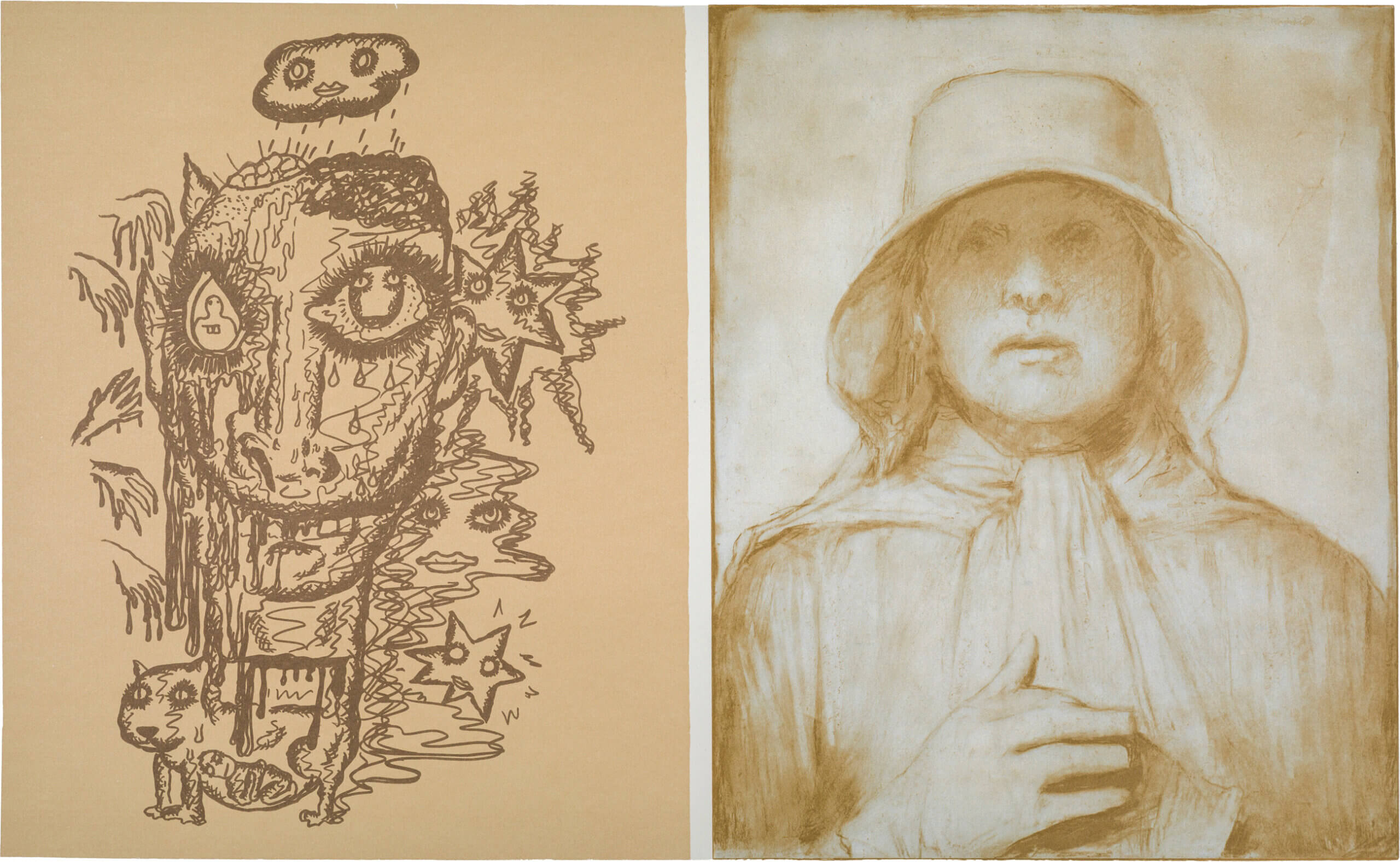 Kitsch Meets Art: Nerdrum & Melgaard Exhibition in Oslo
Two worlds collide when the exhibition Nerdrum & Melgaard opens 6 pm Thursday 7th November at Fineart Oslo. The show will include limited edition prints by two of Norway’s most influential and controversial figures in the kitsch and art world respectively. Odd Nerdrum and Bjarne Melgaard represent diametrically different but powerful visions: the former with his classical figuration, focusing on timeless imagery and vulnerability, and the latter with his contemporary, expressive style, tapping into sexuality, identity and the grimness of life. On display will be recent as well as venerable prints that have stood the test of time, original drawings, sculptures and a unique collaborative self-portrait. This double portrait reveals the opposing forms of expression — giving the public an opportunity to closely compare the two. Odd Nerdrum and Bjarne Melgaard agreed last year to do a collaboration. Here together with the gallery owner Rolf Stavnem. Photo: Naina Helén Jåma / VG The Norwegian Broadcasting Corporation (NRK) will be present and cover the opening, which will include opening remarks from the real-estate investor Christian Ringnes and the editor-in-chief of Subjekt, Danby Choi.
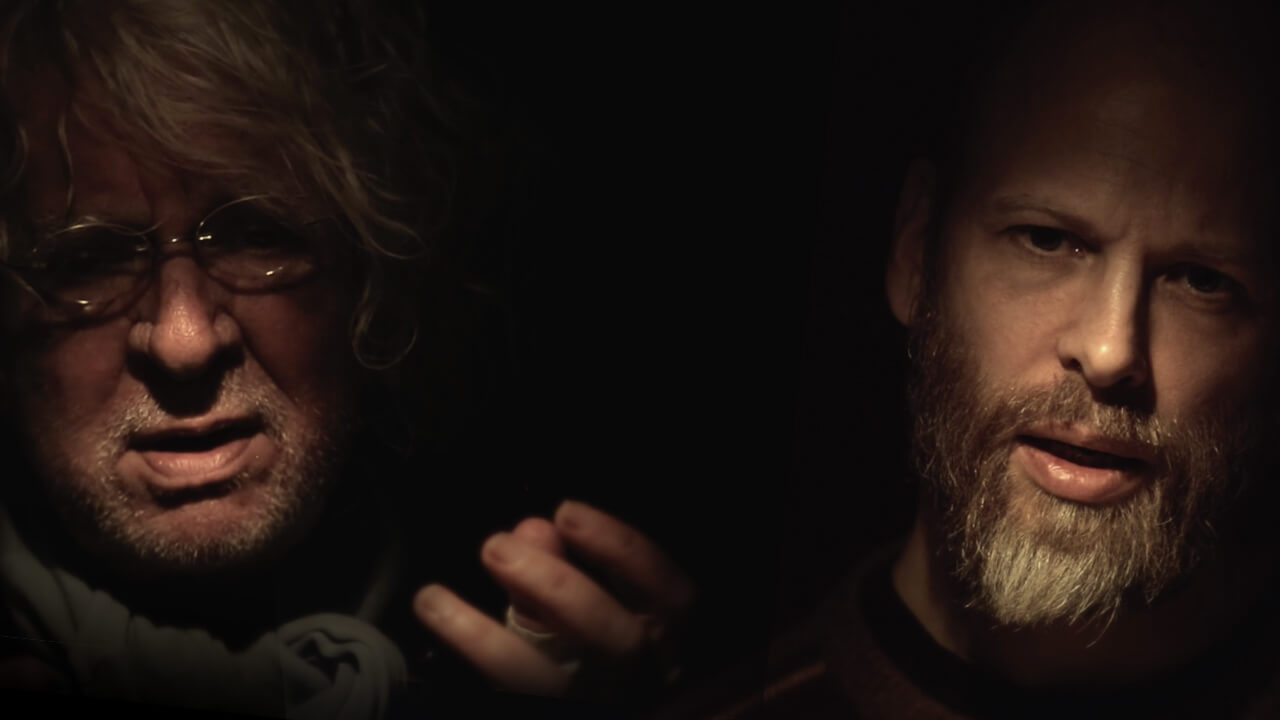 Rembrandt’s Melancholy and Classical Values
Do you want to know how the mind of the greatest classical painter of our time works?Do you wonder what “classical values” actually are?And why melancholy is actually that important to us? Odd Nerdrum and his former student Jan-Ove Tuv sit down for a conversation in the building which is the Nerdrum Museum in the making: The old Pipe House at Agnes Square outside of Stavern.With a philosophical approach to painting, the discussion will move beyond the strokes and attempt to explain the meaning of painting. Join a one hour conversation about: • The importance of Rembrandt’s melancholy• Why storytelling is so important to us• Why “modern” values are destructive for classical painters and the audience. The event will take place September 14th at 17:00 – 18:00. Tickets are now available.


 English